
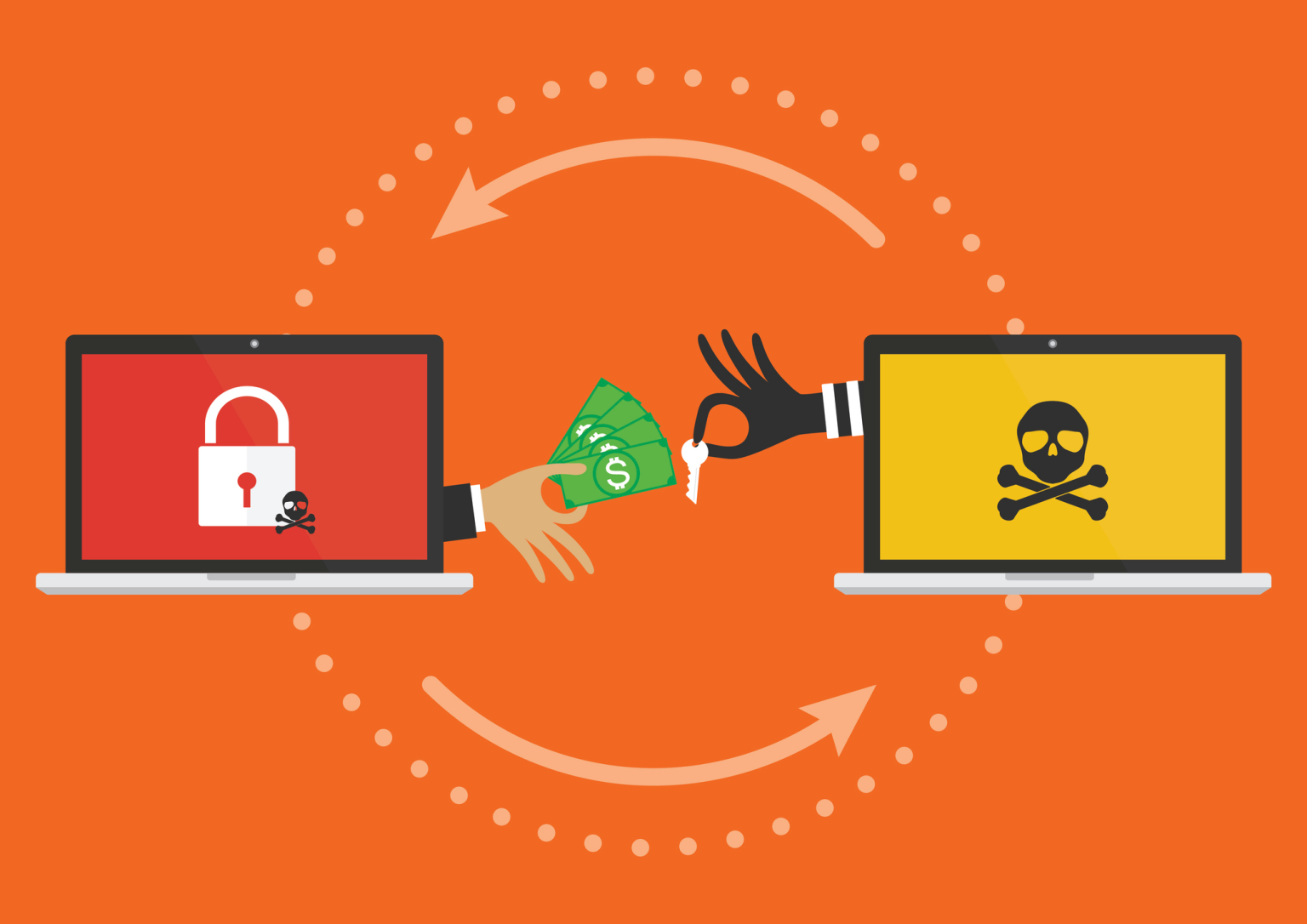
Flights canceled. Emergency rooms shut down. Centuries-old companies shuttered.
Ransomware and other similar cyberattacks have become so routine that even those serious human and economic consequences are often overlooked or easily forgotten.
This lack of focus is dangerous.
As former leaders of FBI and CISA cyber units, we’ve seen cybercrime ripple through communities – disrupting critical services, destroying jobs, and sometimes costing lives. Today’s ransomware numbers tell a stark story. The Department of Homeland Security reported more than 5,600 publicly-disclosed ransomware attacks worldwide in 2024, nearly half of them in the United States. The FBI found that ransomware incidents increased nearly nine percent year over year, with almost half targeting critical infrastructure. Attacks on these organizations pose the greatest threat to national security and public safety.
Despite this trend, we’re cautiously optimistic about the administration’s new National Cyber Strategy. It focuses on protecting critical infrastructure and stopping ransomware and cybercrime—threats it correctly elevates to top-tier national security threats.
But success requires sustained action across government and industry. Adversaries are evolving faster than defenses: ransomware attacks now average $2.73 million per incident, driving annual losses into the billions. Attackers have compressed their operations from weeks to hours, disabling Endpoint Detection and Response (EDR) tools and leaving defenders almost no time to stop an attack.
Basic cyber hygiene still matters. But it’s no longer sufficient. Attackers steal valid credentials, exploit known vulnerabilities, disable tools, and move laterally at machine speed, now accelerated by AI. They need a stunningly low level of technical expertise to do so, and AI tools are increasing the speed and scale of their actions.
Our defenses must keep pace with evolving threats. Protecting national security requires immediate action. Automating cyber threat information sharing offers clear benefits, but government agencies need significant structural and technological upgrades before they can effectively share data. This requires sustained investment and oversight.
The government does not have to do this alone. Industry and academia possess tools that could mean the difference between progress and revisiting this same conversation four, eight, or twelve years from now. Forums like CISA’s Joint Cyber Defense Collaborative (JCDC), the National Cyber Investigative Joint Task Force (NCIJTF), and NSA’s Cyber Collaboration Center (CCC) have demonstrated that information fusion and joint operational planning can work. But overlapping missions and unclear playbooks leave companies guessing what to share, when to share it, and with whom. These forums and underlying collaboration mechanisms must be resourced, deconflicted, and made predictable.
Despite the noble efforts of government agencies to share behind-the-scenes and interact with industry with one voice, the current structure remains fragile and dependent on personal relationships. We simply cannot afford this fragility or inefficiency, particularly in an era of constrained government cyber resources and escalating threats.
Effective protection of critical infrastructure requires focused collaboration. The administration’s strategy rightly emphasizes this, but narrowing this focus will not be easy. For years, the government has tried to cover sixteen sectors and hundreds of thousands of entities equally—an impossible task. Equal attention for all is unrealistic. Looking back, we wish we had prioritized more strategically during our time in government.
Prioritization is politically difficult, but operationally necessary. When everything is critical, nothing truly is. For the most important critical infrastructure, we must focus on resilience—ensuring systems can withstand attacks and recover quickly—rather than assuming we can prevent every breach.
The government can take concrete steps now to disrupt the ransomware ecosystem. Ransomware has cost American lives; designating certain ransomware actors and their enablers as Foreign Terrorist Organizations could unlock more powerful sanctions, diplomatic action, and intelligence operations. Sensible regulation holding cryptocurrency exchanges accountable for knowingly laundering ransomware proceeds could weaken criminal business models while strengthening legitimate digital asset markets in the U.S. and allied nations.
The technology and cybersecurity industry has responsibilities, as well. Industry must share actionable intelligence where legally permitted, pressure-test government programs with candid feedback, and support reauthorization of the Cybersecurity Information Sharing Act of 2015.
We all must do our part. Every day that passes without us confronting these critical questions is a gift to our adversaries. This will only be exacerbated by advancements in AI. We are hopeful that the release of this administration’s National Cyber Strategy will spark much-needed debate and decisions about the role of the government and industry in advancing our nation’s cybersecurity and resilience.
Cynthia Kaiser is senior vice president of Halcyon’s Ransomware Research Center. She was formerly Deputy Director of the FBI’s cyber division.
Matt Hartman serves as chief strategy officer at Merlin Group, where he is focused on identifying, accelerating, and scaling the delivery of transformative cyber technologies to the public sector and critical industries. Prior to this role, Matt spent the last five years serving as the senior career cybersecurity official at the Cybersecurity and Infrastructure Security Agency (CISA) within the Department of Homeland Security.
The post We’ve seen ransomware cost American lives. Here’s what it will actually take to stop it. appeared first on CyberScoop.
–
Read More – CyberScoop