
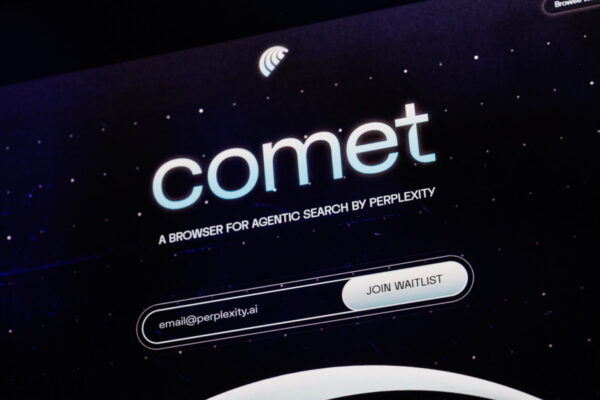
A federal judge has blocked Perplexity, makers of the Comet AI browser, from accessing user Amazon accounts and making purchases on their behalf.
In an March 9 order, Judge Maxine Chesney of the Northern District Court of California said the temporary injunction reflects the likelihood that Amazon “will succeed on the merits” of its claim that Perplexity’s AI agents violate the Computer Fraud and Abuse Act and the Comprehensive Computer Data Access and Fraud Act.
The court held that Amazon “has provided strong evidence that Perplexity, through its Comet browser, accesses with the Amazon user’s permission but without authorization by Amazon, the user’s password-protected account.”
Per the ruling, Perplexity must prohibit Comet from accessing, attempting to access, assisting, instructing or providing the means for others to access Amazon user accounts. Perplexity must also delete all Amazon account and customer data it collected along the way.
Perplexity told the court that the purchases were legitimate and legal because their users had authorized their AI agent to make the purchases on their behalf. But Amazon has explicitly denied them such permission, saying the agents make mistakes, interfere with Amazon’s own algorithm and place their users at an elevated cybersecurity risk.
Additionally, Chesney wrote that Amazon has incurred “significantly more” than $5,000 needed to qualify as computer fraud, including the cost of time spent by Amazon employees to develop new web tools to block Comet’s access to private customer accounts and detect future unauthorized access by the browser.
According to Amazon, they have asked Perplexity officials on five separate occasions to cease covertly accessing Amazon’s store with its agents. In a cease-and-desist letter sent to Perplexity Oct. 31, 2025, attorney Moez Kaba of law firm Hueston Hennigan wrote to Perplexity, alleging the automated purchases degrade the online shopping experience for Amazon customers.
Amazon requires AI agents to digitally identify themselves when using the e-commerce platform. But they alleged Perplexity executives “refused to operate transparently and have instead taken affirmative steps to conceal its agentic activities in the Amazon Store,” including configuring their software to covertly pose as human traffic.
“Such transparency is critical because it protects a service provider’s right to monitor AI agents and restrict conduct that degrades the customer shopping experience, erodes customer trust, and creates security risks for our customers’ private data,” wrote Kaba.
Additionally, such agents could pose a further risk to Amazon through cybersecurity vulnerabilities exploited by cybercriminals to hijack AI browsers like Comet.
The lack of response from Perplexity executives to earlier entreaties from Amazon may have played a role in the court’s injunction, with Chesney noting that Amazon was likely to suffer irreparable harm without court intervention because “Perplexity has made clear that, in the absence of the relief requested, it will continue to engage in the above-referenced challenged conduct.”
The case could have broader implications for the way commercial AI agent tools are designed and how far they can legally act on a person’s behalf. Notably, while Amazon opposes Comet’s AI-directed purchases, Perplexity claims that its users have given them permission to make purchases on their behalf.
Perplexity argued a court order halting their AI’s activities would go against the public interest, depriving them of consumer choice and innovation. Chesney concluded the opposite, endorsing Amazon’s argument that the public has a greater interest in protecting their computers from unauthorized access.
Perplexity did not respond to a request for comment on the ruling at press time.
You can read the injunction below.
The post Federal judge blocks Perplexity’s AI browser from making Amazon purchases appeared first on CyberScoop.
–
Read More – CyberScoop