
Government agencies, cybersecurity companies and threat researchers are pouring resources into studying how fast-developing AI tools can be wielded by malicious actors to hack into victim organizations.
But as agentic AI becomes more embedded in business infrastructure, there’s also a high possibility that a breach could be caused by an insider guiding the tool, whether maliciously or due to lack of security controls.
In research shared exclusively with CyberScoop, DTEX researchers detail how a common workflow in Anthropic’s Claude Cowork used in corporate environments offers convenience for AI agent deployment but grants near-total access to the system.
Claude Cowork includes tools that let users remotely control their agents. One particular tool, known as Dispatch, relays commands from a user’s phone to their desktop Claude agent. It also includes a plugin for communicating with Salesforce AI agents that access and transfer data.
DTEX researchers tested two scenarios. The first prompted Claude to summarize information from Salesforce and paste it into a draft Outlook email. The second tasked the agent with archiving selected files and transferring them via the Cowork app.
In both cases, researchers used simple, single-turn prompts and spent between 10-30 minutes preparing to exfil the data.
Alex Desmond, director of insider threat intelligence and innovation at DTEX, told CyberScoop that both improvements in frontier models and deeper integration of AI tools into IT network operations have reduced the time defenders have to react to a breach.
“In cyberattacks, you talk about the kind of execution time of adversaries coming in and dropping ransomware, we’re now seeing the kill chain drop to 30 and 10 minutes depending on what they’re doing,” Desmond said. “Six months ago, that was a couple of hours.”
But that speed, when paired with direct access to business networks or cloud services, can also create an insider threat nightmare for organizations that must monitor for both malicious actors and potential mistakes from legitimate employees using the technology.
Over the past few years, western IT and cybersecurity businesses have been inundated with job applicants secretly working on behalf of the North Korean government. Their salaries are used to evade international sanctions and fund Pyongyang’s nuclear program, but it also positions the individuals to access or steal sensitive data or assets from these companies.
“You’ve got a nation-state actor getting into an environment legitimately,” Desmond said. “Now if you gave them access to AI tools on top of that…you’re like ‘here’s the keys to everything and here’s this awesome tool that’s just going to make your job – stealing our data – easier.’”
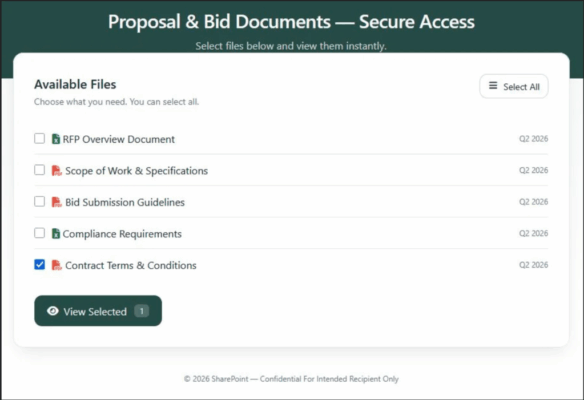
Tests by DTEX confirmed that the agents indeed had access to sensitive systems, applications and data – including the ability to download SharePoint corporate data, production documentation in OneDrive, access to Outlook email, Salesforce data (and all the data it can access), and any other files on the user’s endpoint device. For each of these applications, Claude Cowork has a dedicated plugin or API to share externally if prompted.
To be clear, DTEX’s research does not involve exploiting a software bug or configuration vulnerability, and it doesn’t come with a CVE. It’s more of an IT governance and visibility problem. Businesses are racing to integrate AI tools into their workflow and pushing employees to use the technology while failing to put in place the kind of security controls, access policies and monitoring required to spot problems.
For instance, it may not be possible to determine how a data breach or leakage involving an AI agent actually occurred if an organization is not logging and auditing its prompts – or whether the incident was the result of an agent running amok or responding to potentially malicious instructions.
While network and cloud monitoring can identify when data is being accessed or downloaded from SharePoint, that may not be a strong enough signal to stand out for defenders.
“If a user’s normal workflow is to pull sensitive files down to work locally all the time, you don’t have endpoint monitoring and you introduce an AI agent, it then just has access to all that data” along with the ability to exfiltrate it,” Desmond said.
The post Your AI agent could become your biggest insider threat appeared first on CyberScoop.
–
Read More – CyberScoop